No fewer than 1,011 out-of-school children in Jakusko Local Government Area of Yobe State have been integrated into the formal education system after completing a non-formal learning programme implemented by GHIV Africa in partnership with UNICEF and other development partners.
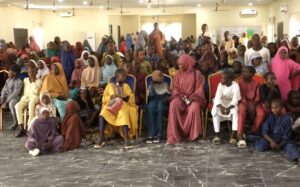
The children were mainstreamed into conventional schools under the Alternative Basic Education (ABE) programme following their successful performance in an examination conducted at the end of the learning intervention.
The Executive Director of GHIV Africa, Mulikat Bamidele Shagba, disclosed this during the mainstreaming exercise in Jakusko, saying 1,180 children were initially enrolled in the programme.
She explained that 1,080 of the children completed the learning activities and sat for the mainstreaming examination, while 1,011 passed and qualified for admission into formal schools.
Shagba said the beneficiaries underwent between six and eight months of non-formal education to prepare them for integration into the conventional school system.
She added that GHIV Africa was providing the necessary support to facilitate their transition and ensure that they continued their education.
According to her, the intervention was designed to run for three years and was currently in its second year, with plans to extend the programme to other communities yet to benefit.
She said the organisation had also established a monitoring mechanism involving parents, teachers and community volunteers to ensure that the children remained in school and did not return to the streets.
 Also speaking, the Yobe State Commissioner for Basic and Secondary Education, Dr Abba Adam Idris, commended GHIV Africa, UNICEF and other development partners for supporting efforts to bring out-of-school children into the formal education system.
The commissioner, who was represented by the ministry’s Director of Quality and Assurance, Adamu Sule, said the state government was committed to ensuring that every child in Yobe had access to education, in line with the directive of Governor Mai Mala Buni.
He urged learning facilitators to intensify efforts to identify and enrol children still excluded from the education system, particularly those in villages, markets and other public places.
Idris also called on parents and community leaders to cooperate with the implementing organisations, stressing that education was a fundamental right of every child.
He appreciated GHIV Africa, UNICEF and other development partners for extending the intervention to Jakusko, adding that the ministry was ready to support similar initiatives across the state.
In his remarks, the Secretary of the Yobe State Agency for Mass Education, Usman Mohammed, described the mainstreaming exercise as an important bridge between non-formal and formal education.
He urged parents, caregivers and community leaders to encourage the beneficiaries to remain in school, noting that enrolment alone was not enough without regular attendance and retention.
Mohammed said the agency remained committed to expanding educational opportunities for residents, adding that non-formal education provided an alternative pathway for children and others who had missed out on conventional schooling.
Similarly, the Executive Secretary of the Yobe State Arabic and Islamic Education Board, Dr Umar Abubakar, represented by the state coordinator of Tsangaya Education, Usman Lawan, commended GHIV Africa for providing children with opportunities to acquire basic and formal education.
He said integrating Tsangaya learners into broader educational opportunities would expand their knowledge and equip them with skills to contribute meaningfully to society.
Some of the beneficiaries, Abubakar Yusuf Jallaba and Umaima Ahmed, who spoke to YBC News, expressed appreciation to GHIV Africa for giving them the opportunity to acquire formal education.
They said the programme had broadened their understanding of the importance of education and pledged to remain committed to their studies.
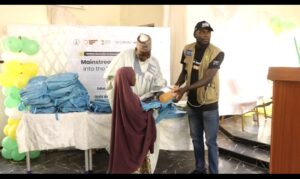
Highlights of the event included the presentation of writing materials, school uniforms and certificates to the beneficiaries.